


SIUT Professors Present Innovative Approaches to Engineering Education at the International Conference in Tashkent

SIUT professors took part in the International Scientific and Technical Conference “System Thinking in the Search for Solutions in Engineering Technologies,” held on October 16–17, 2025, at the Tashkent Institute of Chemical Technology.
The forum, organized with the support of the Ministry of Higher Education, Science and Innovation of the Republic of Uzbekistan and in partnership with leading scientific institutions from Russia, China, the Republic of Korea, Belarus, Azerbaijan, Kazakhstan, Spain, Hungary, Slovakia, and other countries, became a major platform for discussing the latest scientific advancements in digitalization, automation, and international collaboration in technical education.
SIUT professors presented a series of reports highlighting the university’s strategic approaches to modern engineering education.
Vice-Rector for Science and Innovation, Dr. Tulkun Samukov, in his report “SIUT Education and Research for Uzbekistan’s Development” outlined the university’s strategic vision for advancing science and education. He detailed the current research priorities, mechanisms of international cooperation, and their practical impact on accelerating Uzbekistan’s innovative and technological development.
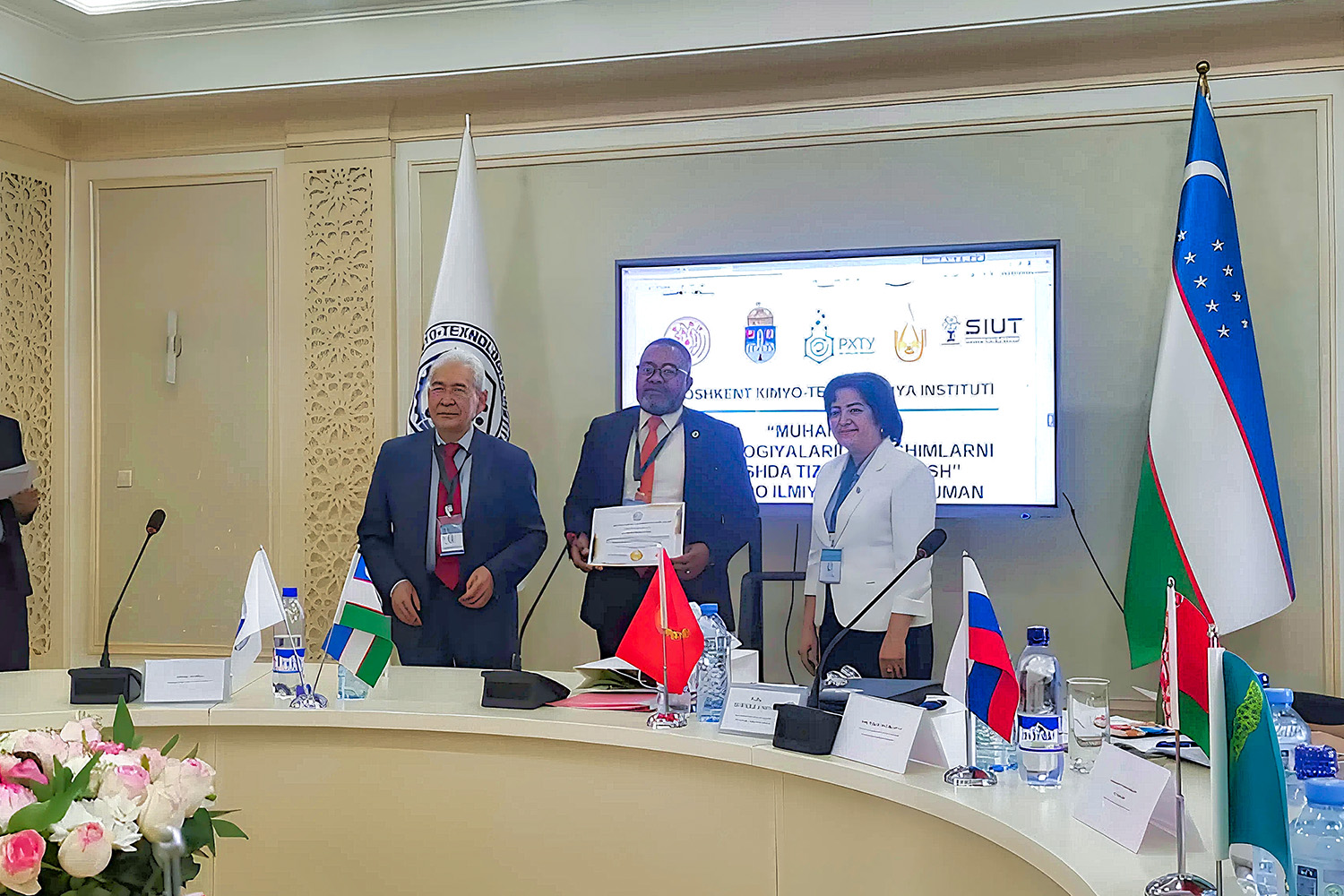
Dean of the French Higher School of Engineering and Commerce (SIUT), Professor Jimbo Claver, presented “Systemic AI-Driven Transformative Education for Innovative Engineering Technology”, in which he discussed the integration of artificial intelligence to create adaptive, forward-thinking educational models. His presentation focused on how AI tools can elevate engineering education to meet the standards of the “Industry 4.0” paradigm.
Dean of the School of Engineering, Professor Mohammad Reza Bahrami, delivered a presentation titled “Engineering Education as a Complex System: Designing Syllabi for a Sustainable Future”. He emphasized that engineering training should be viewed not as a set of separate disciplines, but as an interconnected, evolving system. Professor Bahrami highlighted the importance of embedding environmental and social responsibility into engineering curricula to ensure the long-term sustainability of technological projects.
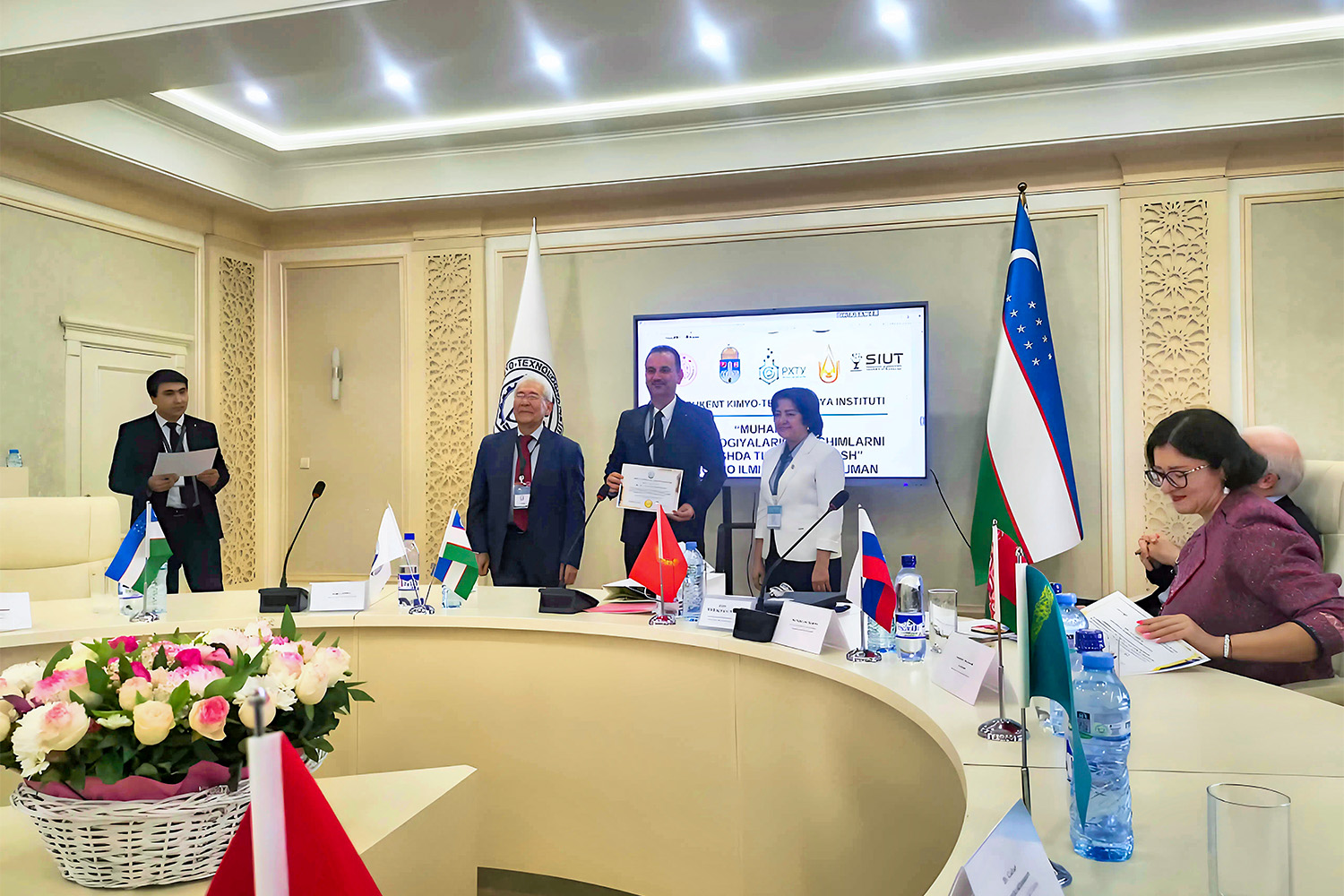
The conference was also attended by scholars from such universities as Tsinghua University (China), Ca’ Foscari University (Italy), St. Petersburg Technological Institute, Mendeleev University of Chemical Technology (Russia), Yildiz Technical University (Turkey), and Auezov University (Kazakhstan), as well as representatives of several industrial companies from Uzbekistan.
Beyond plenary and sectional sessions, the program featured several practical visits, including tours to “Technopark LLC” and various research laboratories in Tashkent.
The presentations delivered by SIUT professors addressed some of the most pressing topics in contemporary engineering education and research. Their contributions sparked vibrant academic discussions, reflecting strong international interest in the innovative educational models promoted by SIUT.
As a result of the conference, the SIUT delegation established a number of promising academic and industrial contacts — an important step toward expanding global cooperation and strengthening the university’s dual education system, which combines academic learning with practical, real-world training.


