


Education, Career, and Spiritual Values: A Dialogue on the Role of Modern Women Held at SIUT

On November 3, 2025, SIUT hosted a meeting that demonstrated how the university’s mission extends far beyond engineering and technology — embracing the spiritual, social, and humanitarian development of youth.
As part of the university’s Student Girls’ Club, a spiritual and educational meeting was held, focusing on preparing young people for family life, preventing early marriages, and — in a broader sense — shaping the identity of the modern, educated woman.
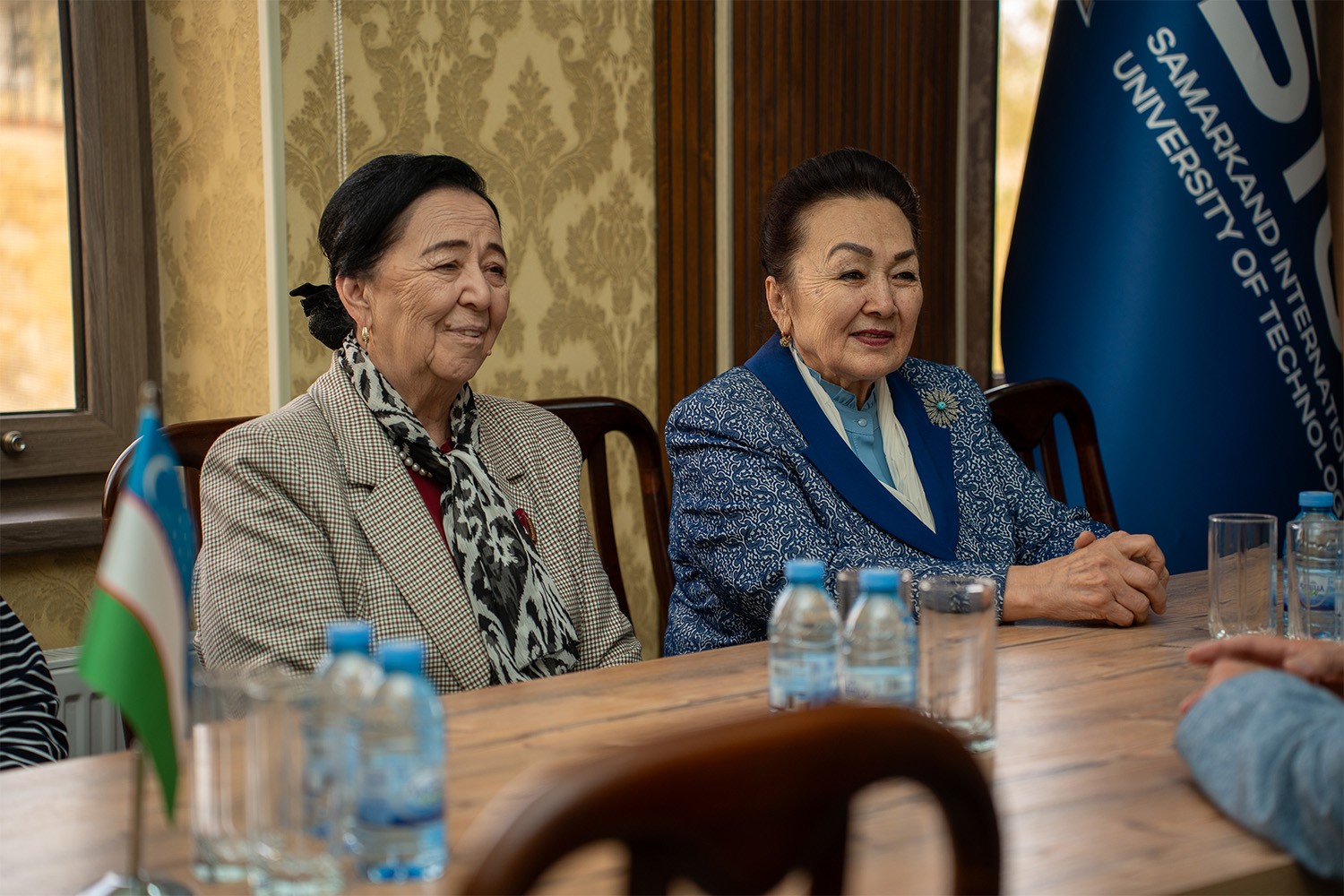
The meeting was honored by the presence of prominent public figures of Uzbekistan: Ms. Farida Abdurakhimova — Head of the Department for Coordination of Women’s Affairs Groups under the Committee on Religious Affairs of the Cabinet of Ministers of the Republic of Uzbekistan, Honorary Senator (since 2020), member of the Expert Group of the Commission on Gender Equality under the Oliy Majlis of the Republic of Uzbekistan, Candidate of Pedagogical Sciences, and Professor; and Ms. Oynisa Musurmonova — Deputy Director of the Research Institute “Oila va Gender” (Family and Gender), Head of the Republican Movement “Oqila Ayollar Harakati” (Wise Women’s Movement), Member of Parliament of the Legislative Chamber of the Oliy Majlis of the I and II convocations, Doctor of Pedagogical Sciences, and Professor.
Before the meeting, the guests were introduced to the university’s activities. As part of their visit, they attended lectures, highly praised the organization of the educational process, and paid special attention to the work of the Student Girls’ Club and the favorable conditions created for female students.
During the meeting, participants engaged in a meaningful discussion on the role of women in family and society, the preservation of moral values, and ways to enhance youth participation in social life.
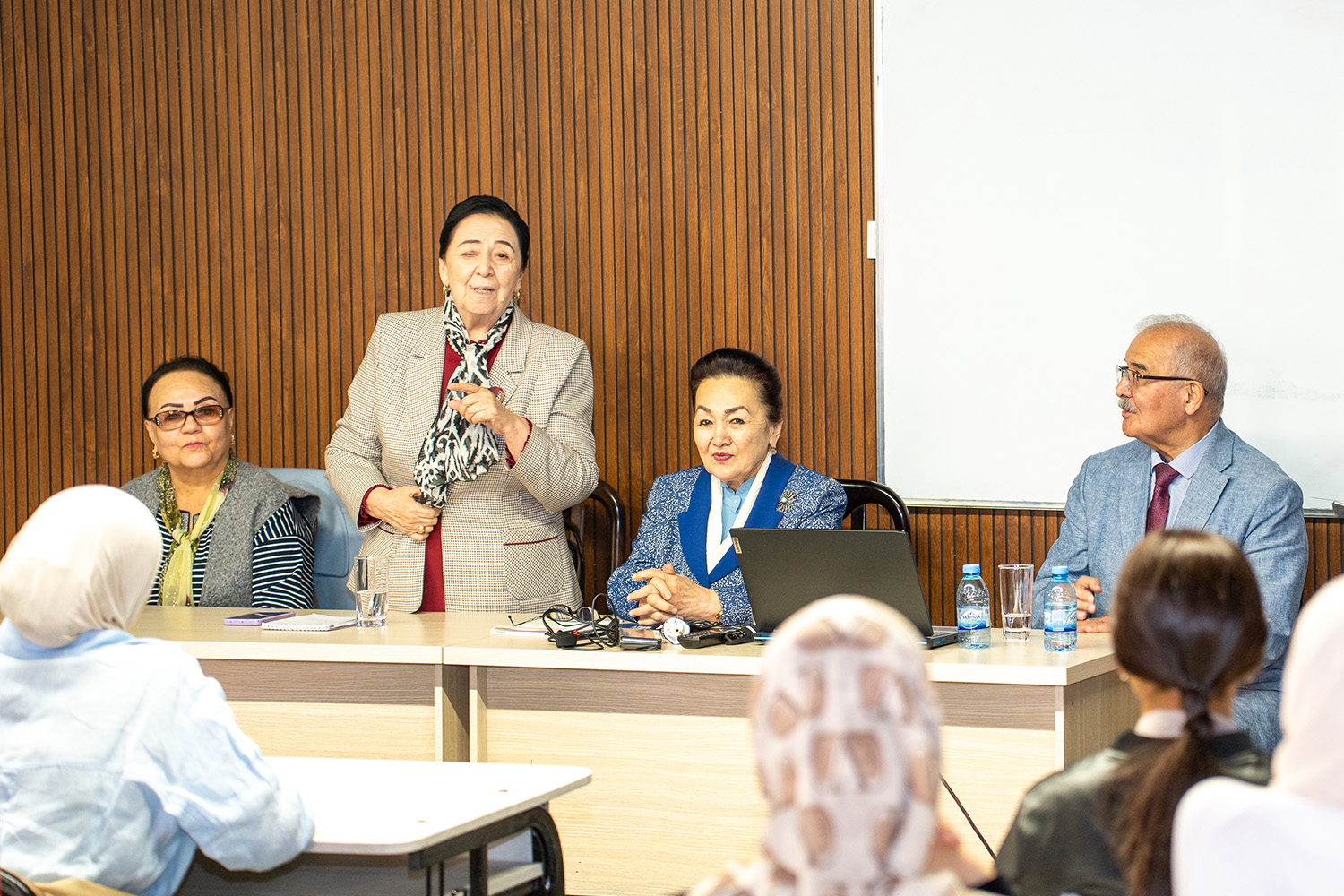
In her speech, Senator Farida Abdurakhimova highlighted the wide range of opportunities being created for women in Uzbekistan, emphasizing the country’s gender equality policy and the development of the “Women Leaders’ School.” She shared several key statistics:
- Women now make up 35% of the public administration sector.
- They account for 38% of the members of the Oliy Majlis (Parliament).
- Women represent 53% of master’s degree students at universities across the country.
- 25% of scientific research in Uzbekistan is conducted by women.
She also noted that over two hundred talented female students are currently studying abroad under state scholarship programs in highly demanded fields such as engineering, energy, management, and IT.
“A modern woman is an active social leader and a key participant in the country’s development,” emphasized Senator Farida Abdurakhimova. “If you are educated, your family will be strong, your country will prosper, and the future will be bright.”
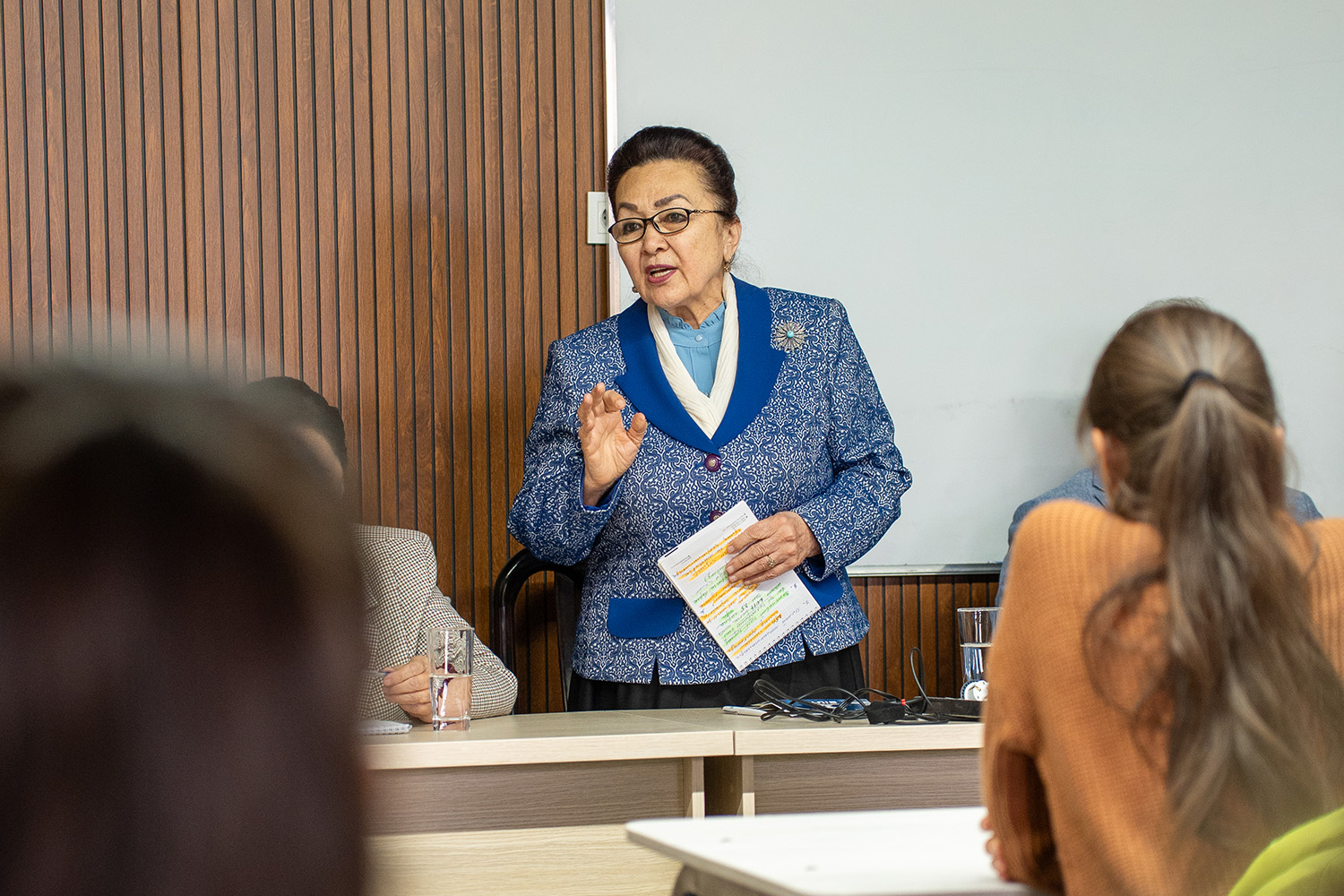
Professor Oynisa Musurmonova focused on the vital contribution of educated and active women to the progress of society. She cited the words of the President of Uzbekistan, Shavkat Mirziyoyev:
“Our youth must master at least one profession and two foreign languages,”
and urged the students to continuously pursue knowledge and professional growth.
“Today’s world offers limitless opportunities,” she said. “But those opportunities are open only to those who strive, who thirst for knowledge, and who work tirelessly on self-development. You are the creators of the future — the strength and pride of our nation.”

The meeting took place in the format of an open, interactive dialogue. Students asked questions about personal experiences, overcoming challenges, and the keys to success — receiving detailed and sincere answers from the speakers. The guests also introduced the ‘Oqila Ayollar’ (Wise Women) movement and shared information about new legislative initiatives, grants, and research projects supporting women.
Today, female students make up 38% of the SIUT student body. The university provides comprehensive support for their personal and professional development — from leadership programs and research clubs to international internships and participation in academic grants.


